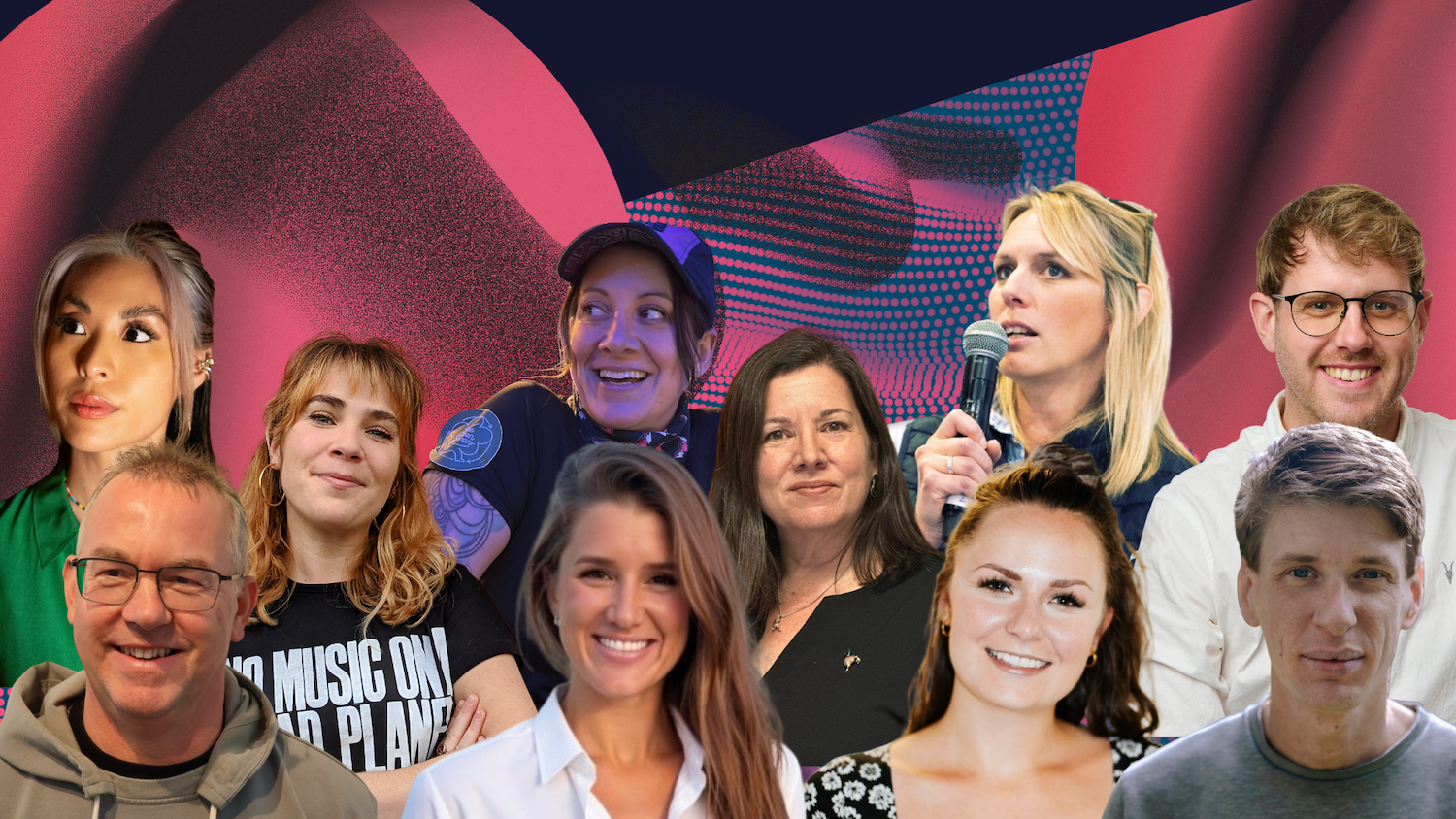


Built In, Not Bolted On: Madeleine Smith on Making Sustainability a Creative Standard in Music
.png)
“Fans are being asked to trust claims they cannot see, and artists are often put in the position of carrying messages that the system around them hasn’t fully earned yet.”
___________________________________________________________
Every sound tells a story.
The Noise We Make is a Hope Solutions series that listens to the people behind the noise: the artists, organisers, and changemakers using creativity as a force for good. Together, we explore what progress sounds like, and how the choices we make today will echo in the future.
When the music industry talks about sustainability, it tends to start with the stage. The lights, the generators, the tour buses. The visible, audible, measurable footprint of live performance.
Madeleine Smith starts somewhere else entirely.
As ESG and Enterprise Strategy Leader at Warner Music Group, Madeleine operates at a scale that most sustainability conversations in music never reach. With WMG spanning more than 70 countries, hundreds of artists, and a publishing catalogue of over one million copyrights, the challenge isn't just reducing emissions: it's building the frameworks, methodologies, and governance structures that make systemic change possible across one of the world's most complex creative organisations.
Her work is foundational in the truest sense. As an architect of the recorded music industry's Scope 3 methodology, she has helped define how the sector measures, reports, and takes responsibility for the emissions it cannot directly control: the supply chains, the manufacturing, the distribution, the streaming infrastructure that underpins how music reaches billions of people every day.
But Madeleine's perspective isn't only environmental. It's strategic. Her focus is on integrating ESG into the core of business decision-making, not as a compliance exercise or a reputational shield, but as a driver of long-term growth, competitive advantage, and resilience in the face of accelerating regulatory change.
At a moment when the industry is under growing pressure to move beyond pledges and into practice, her work represents what genuine institutional leadership looks like: rigorous, unglamorous, and essential.
So, let's explore the noise Madeleine Smith is helping to make…

The Noise You Make: What kind of impact are you (or your organisation) making through your work right now?
Right now, I’m focused on making sure sustainability in music becomes a creative standard. At Warner Music Group, we’re building impact that lasts through the levers that drive change in our business and the music ecosystem: physical products and supply chains. But just as importantly, we’re strengthening something deeper: trust. Trust with artists, fans, employees, and partners.
Music is a trust-based ecosystem, and sustainability is not separate from that. It’s part of protecting long-term credibility, resilience, and cultural relevance. For artists, this is practical. We’re building the infrastructure so they can lead with integrity without carrying the burden alone, with better options, stronger standards, and defensible claims.

The Noise You Hear: What signals, movements, or shifts in the industry are catching your attention?
The signals catching my attention are the ones redefining credibility. Greenwashing scrutiny is accelerating, regulatory expectations are tightening globally, and sustainability claims are being assessed with more discipline by investors, platforms, and the public. At the same time, culture is raising the bar: fans are asking sharper questions faster, employees are demanding coherence, and artists are insisting on integrity. These shifts are converging into one clear standard: alignment between what you say, ship, sell, tour, and scale. In music, credibility is not abstract.
The Noise That Needs to Change: What’s still too loud, too quiet, or missing altogether in the sustainability conversation?
What still needs to change is the way sustainability is communicated without enough shared proof behind it. Fans are being asked to trust claims they cannot see, and artists are often put in the position of carrying messages that the system around them hasn’t fully earned yet. That imbalance creates confusion and, ultimately, fatigue.
What’s missing is work that reduces the burden on artists and audiences by making impact clear, comparable, and measured. In music, sustainability should not depend on who tells the story best. It should be based on clear design, sound decision making, and a commitment to progress.
That’s why we are focused on building the foundations first, including supporting industry research with MIT, Coldplay, and Live Nation to establish a first-of-its-kind carbon footprint baseline for live music in the UK and US. When the work is solid, the story can speak for itself.

The Quiet Work: What behind-the-scenes actions make the biggest difference?
Quiet work is where leadership shows up without applause. It’s the discipline of doing the work credibly without recognition because that’s the expectation. It means building traceability into supply chains, setting standards that can scale, and making sure sustainability claims are earned before they are shared.
In music, this work carries real weight because credibility attaches to people, not institutions. Artists should not be asked to front commitments they didn’t design or cannot verify. Fans should not be asked to trust stories without substance behind them. The quiet work is about removing that risk. It’s creating conditions where artists and companies can lead with confidence, instead of caution. Where sustainability is built into the experience, not balanced on someone’s reputation.

The Next Sound: What’s next for you? What sound would you love the future of live events to make?
The future I want is one where live music stays loud, emotional, and human, while the systems behind it evolve to tread more lightly. Sustainability shouldn’t feel like an added restraint. It should be embedded so deeply into how events are produced that audiences never have to think about it and artists never have to explain it.
Live music should keep doing what it has always done best: bringing people together and making them feel part of something larger than themselves. What must change is the expectation that artists shoulder the responsibility alone. Sustainability should meet them where they already are: in their values, their creativity, and the communities they shape.
That’s the next sound for me: an industry that moves people deeply while taking responsibility seriously. Integrity, built in and scaled out.
___________________________________________________________
Connect with Madeleine on LinkedIn.
Discover more about Warner Music Group on their website or:

.jpg)